
DOT Medical Card: How to Get It, How Long It Lasts, Who Is Exempt
Published · Checked
Short answer
A DOT medical card is the Medical Examiner's Certificate (Form MCSA-5876) you get after passing a physical with an examiner listed on FMCSA's National Registry. It is valid for up to 24 months, and the examiner can issue it for a shorter period. Since June 23, 2025, CDL and permit holders with a current certificate no longer have to carry it.
Key facts
- Drivers certified under the insulin-treated diabetes or the alternative vision standard must be re-examined at least every 12 months. 49 CFR 391.45
- If the examiner needs more information, you have 45 days to provide it or complete the exam. 49 CFR 391.43
- Vision: at least 20/40 in each eye and a 70-degree field of vision; hearing: a forced whisper at 5 feet in the better ear. 49 CFR 391.41
- The state marks you not certified within 10 calendar days of the card expiring and must complete a CDL downgrade within 60 days. 49 CFR 383.73
The DOT medical card helps truck drivers prove they meet federal physical qualification standards and get on the road. You get it by passing an exam with a medical examiner listed on the National Registry. The card can last up to 24 months.
How long the card lasts
One of the first things you'll need to know when you get a DOT medical card is how long it lasts. The required validity period of the medical examiner's certificate may vary depending on the examiner's decision.
The federal rule on who must be examined lists: "Any driver who has not been medically examined and certified as qualified to operate a commercial motor vehicle during the preceding 24 months". 49 CFR 391.45
| Driver | New exam due | Rule |
|---|---|---|
| Most drivers | At least every 24 months | 49 CFR 391.45(b) |
| Insulin-treated diabetes (391.46) | At least every 12 months | 391.45(e) |
| Vision exemption route (391.44) | At least every 12 months | 391.45(f) |
| Exempt intracity zone drivers | At least every 12 months | 391.45(c) |
| Examiner sees a need for closer monitoring | Card for less than the maximum period | Part 391, Appendix A (advisory) |
| Ability to drive impaired by an injury or disease | New exam | 391.45(g) |
A great way to know what to expect is to check the expiration date before going into the next exam.
How you get it
Thinking about exactly which medical examiner you want to see will help you decide where to schedule the exam. The exam has to be recorded on a medical examination report in order to get a medical examiner's certificate. Keep in mind that you will need to provide any additional test results within 45 days if the examiner needs more information. Examiners have a job to do, and that is to report the exam to FMCSA electronically by midnight of the next day.
| Step | What happens | Rule |
|---|---|---|
| Examiner | Listed on the National Registry; a licensed ophthalmologist or optometrist may do the vision part | 391.43(a), (b) |
| Exam | Results recorded on the Medical Examination Report, Form MCSA-5875 | 391.43(f) |
| Result | Qualified: Medical Examiner's Certificate, Form MCSA-5876. More information or a further exam needed: 45 days to provide it or complete the exam, and the pending status is reported to FMCSA. Not qualified: reported to FMCSA | 391.43(g), (h) |
| Reporting | Examiner sends the results to FMCSA by midnight (local time) of the next calendar day | 391.43 |
| CDL and permit holders | The state posts "certified" on your CDLIS record when it gets the certificate electronically from FMCSA | 383.71(h) |
| Drivers without a CDL | Keep the original or a copy of the current certificate with you | 391.41(a)(1) |
The federal rule says: "On or after June 23, 2025, a driver required to have a commercial driver's license or a commercial learner's permit under 49 CFR part 383, and who has a current medical examiner's certificate documenting that he or she meets the physical qualification requirements of this part, no longer needs to carry on his or her person the medical examiner's certificate". 49 CFR 391.41
Check out our DOT physical guide to find out what you'll need to get your medical examiner's certificate.
What the exam checks
You have a few standards to meet, including 20/40 vision, a 70-degree field, and color recognition.
| Area | What the standard says |
|---|---|
| Vision | At least 20/40 in each eye and with both eyes, with or without glasses; a field of vision of at least 70 degrees in each eye; recognize standard red, green and amber signal colors (391.41(b)(10)); a vision exemption route exists (391.44) |
| Hearing | Hear a forced whisper at 5 feet or more in the better ear, or an average loss of no more than 40 decibels at 500, 1,000 and 2,000 Hz in that ear on a hearing test, with or without a hearing aid (391.41(b)(11)) |
| Blood pressure | No current diagnosis of high blood pressure likely to interfere with safe driving; the rule gives no number (391.41(b)(6)) |
| Insulin-treated diabetes | Can qualify if the rule's conditions are met, including an evaluation by the treating clinician (Form MCSA-5870) and an exam at least once a year (391.46) |
| Heart and breathing | Cardiovascular disease of the kinds the rule names; breathing problems likely to interfere with safe driving (391.41(b)(4), (5)) |
| Epilepsy | Epilepsy or another condition likely to cause loss of consciousness or control (391.41(b)(8)) |
| Mental health | Disorders likely to interfere with safe driving (391.41(b)(9)) |
| Drugs and alcohol | Schedule I drugs, amphetamines, narcotics or other habit-forming drugs; a current diagnosis of alcoholism (391.41(b)(12), (13)) |
| Limbs | Loss of a foot, leg, hand or arm, or a skill performance evaluation certificate (391.41(b)(1)) |
On blood pressure, the standard asks that a driver "Has no current clinical diagnosis of high blood pressure likely to interfere with his/her ability to operate a commercial motor vehicle safely". 49 CFR 391.41
The rule has no specific number. Some high blood pressure cases may require closer monitoring than others. There are other conditions involved.
Who needs a medical card
When you apply for a CDL, you tell the state which of four kinds of driving you do. It's important to choose the correct type of driving, as the medical card requirement depends on it.
| Category | Who it fits | Medical card |
|---|---|---|
| Non-excepted interstate | Drives or expects to drive across state lines and is subject to Part 391 | Required by federal rule |
| Excepted interstate | Interstate, but only in operations excepted from Part 391 | Not required by federal rule |
| Non-excepted intrastate | Drives only within one state | Set by state rules; Washington and New Jersey require it |
| Excepted intrastate | Within one state, only in operations the state excepts | Set by state rules |
Federal rules require the medical card for non-excepted interstate drivers. Each state will have its own rules for a driver who is certified to drive a commercial truck within the state.
Virginia's DMV says "you must choose the non-excepted status to be qualified to operate in both types of commerce." Virginia DMV
Ask the state about your certification options up front.
Who is exempt
Some trucking jobs fall outside the federal rules. There are several kinds of work, each with their own exemptions and qualifications.
| Operation | What the federal rule excepts | Rule |
|---|---|---|
| School bus operations | Federal safety rules in this subchapter, with a few listed exceptions | 390.3T(f)(1) |
| Government transportation | Federal government, a state, a local government or an approved interstate compact agency | 390.3T(f)(2) |
| Occasional personal property | Not for pay and not for a business | 390.3T(f)(3) |
| Custom harvesting | Drivers of vehicles run by a custom-harvesting operation, for the listed uses | 391.2(a) |
| Beekeepers | Seasonal transportation of bees | 391.2(b) |
| Certain farm vehicle drivers | Part 391 except 391.15(e) and (f), but not drivers of articulated (combination) vehicles | 391.2(c) |
| Covered farm vehicles | The medical part of Part 391 | 391.2(d) |
| Private passenger carriers (nonbusiness) | The medical exam and certificate | 391.68(c) |
One federal exception covers "The occasional transportation of personal property by individuals not for compensation nor in the furtherance of a commercial enterprise". 49 CFR 390.3T
Look for the types of operations that are exempt from the federal medical card rule and figure out whether your specific job qualifies for any such exemption.
When the card runs out
New York's DMV says: "Once your Medical Examiner's Certificate on file expires, you are no longer certified to drive commercial vehicles." New York DMV
The state marks you not certified within 10 days. Be prepared to have your CDL downgraded within 60 days. Some states allow a driver to switch to excepted driving to keep their CDL from being downgraded. Make sure to get a new exam prior to the state marking you not certified and downgrading your CDL.
| When | What the state does | Rule |
|---|---|---|
| Within 10 calendar days of the card expiring or becoming invalid | Updates your status to "not certified" | 383.73 |
| Within 60 days of "not certified" | Completes and records the CDL downgrade, unless you pass a new exam or switch to excepted or intrastate driving where the state allows it | 383.73 |
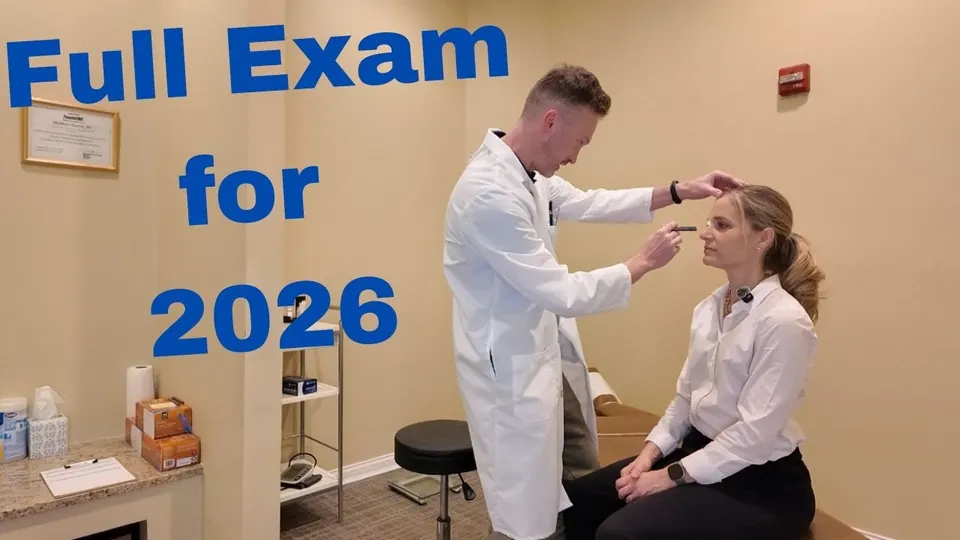
Video
Frequently asked questions
Can I wear glasses for the vision test?
If you see better with the help of glasses, the vision standard may be met.
Do I need a DOT medical card for a non-excepted interstate CDL?
You'll need to get a DOT medical card.
Do CDL holders still have to carry the paper card?
You don't have to carry the paper card.
Sources
- 49 CFR 391.41, Physical qualifications for drivers (eCFR) ecfr.gov checked
- 49 CFR 391.43, Medical examination; certificate of physical examination (eCFR) ecfr.gov checked
- 49 CFR 391.45, Persons who must be medically examined and certified (eCFR) ecfr.gov checked
- 49 CFR 391.46, Physical qualification standards for an individual with diabetes mellitus treated with insulin for control (eCFR) ecfr.gov checked
- 49 CFR Part 391, Appendix A, Medical Advisory Criteria (eCFR) ecfr.gov checked
- 49 CFR 391.2, General exemptions (eCFR) ecfr.gov checked
- 49 CFR 391.68, Private motor carrier of passengers (nonbusiness) (eCFR) ecfr.gov checked
- 49 CFR 390.3T, General applicability (eCFR) ecfr.gov checked
- 49 CFR 383.71, Driver application and certification procedures (eCFR) ecfr.gov checked
- 49 CFR 383.73, State procedures (eCFR) ecfr.gov checked
- Washington State Department of Licensing, Medical certificates and self-certification dol.wa.gov checked
- New Jersey Motor Vehicle Commission, CDL medical certification nj.gov checked
- Virginia DMV, CDL medical certification FAQs dmv.virginia.gov checked
- New York DMV, CDL medical certification dmv.ny.gov read by the author
Published November 27, 2026. Rules, quotes and figures checked against the official sources on November 27, 2026. This guide explains the rules; it is not legal or medical advice. Confirm with your state licensing agency or FMCSA.